
Wind Hazard and Infrastructure Performance Center (WHIP-C)
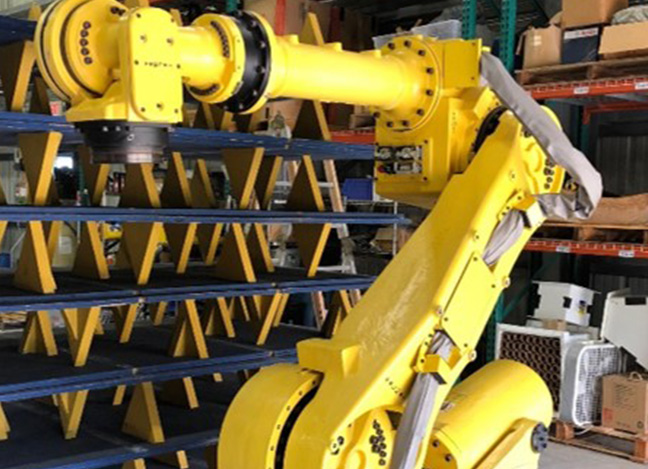
WHIP Center will conduct research to support industries and government agencies that are interested in developing new solutions and products to reduce the impact of hurricane, tornado and severe wind events on buildings and infrastructure while educating the next generation of professionals.
Public Opinion and the Politics of Risk Reduction (POPRR)
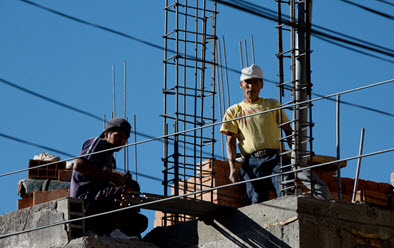
Core disaster risk reduction (DRR) policies, such as building codes and construction regulations, crucially save lives and protect property. The success of these policies relies not only on engineers and civil servants but also on stakeholder participation and public support. Researchers at FIU’s Extreme Events Institute are modeling the dynamics of public support for disaster risk reduction policies and their effective enforcement.
Funded by two research grants from the National Science Foundation (one in collaboration with Vanderbilt University), the POPRR program is collecting data in the United States and in 18 Latin American and Caribbean countries on experiences with extreme events, perceptions of future risk, support for risk reduction policies and trust in the integrity of their enforcement. The program has a particular focus on (a) whether, why and for whom experiencing a disaster alters perceptions of risk and support for risk reduction policies; (b) the duration of any such changes in public support; and (c) the impact of public opinion on policymaking. Findings from the POPRR program are being shared with policymakers, stakeholders, and the public at large, with the goal of improving how these vital public policies are actually enacted and experienced. What is more, the data collected by this program serves as an open-access resource for practitioners and researchers around the world.




Wall of Wind™
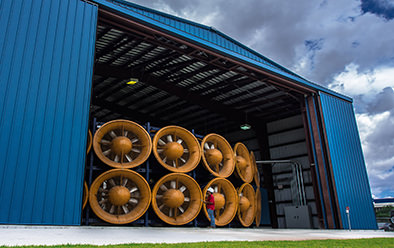
The FIU 12-fan Wall of Wind (WOW) is the largest and most powerful university research facility of its kind and is capable of simulating a Category 5 hurricane – the highest rating on the Saffir-Simpson Hurricane Wind Scale. This level of wind speed testing (with wind-driven rain) at large scales is leading to performance-based designs that are making a significant impact on mitigating hurricane damage and influencing enhanced building codes. Full-scale experimentation results have already been applied to the Florida Building Code. The National Science Foundation (NSF) has designated the Wall of Wind as one of the nation’s major “Experimental Facilities” under the Natural Hazards Engineering Research Infrastructure (NHERI) program as a distributed, multi-user national facility that provides the natural hazards research community with access to research infrastructure. The goal of the WOW facility as a NHERI-EF is to allow NSF-supported researchers to better understand wind effects on building systems and other structures and prevent wind hazards from becoming community disasters. Thus, the Wall of Wind is playing a critical role in advancing the understanding of hurricane impacts on buildings and developing and validating innovative damage mitigation products, thereby enhancing the disaster resilience of our communities and nation.
Discover more about the Wall of Wind














Coastal and Estuarine Storm Tide (CEST)
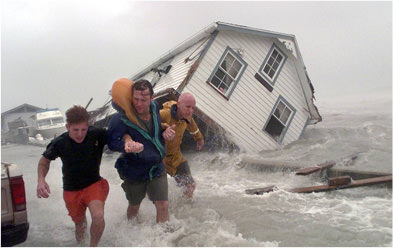
The Coastal and Estuarine Storm Tide (CEST) model is used to estimate storm surge as low pressure weather systems, such as hurricanes and tropical storms, approach coastal areas. Storm surge and coastal flooding have become increasingly appreciated hazards, brought home so clearly by “Super Storm” Sandy. The research team is comprised of geoscientists, mathematicians, meteorologists, and computer scientists. The model takes into account the expected tide at landfall and the atmospheric pressure and wind characteristics of the weather system. It also takes into consideration major coastal topographic features such as coastal ridges and barrier islands. FIU’s research in partnership with the National Hurricane Center will be used to enhance storm surge models for future operational forecasts when a hurricane approaches.




Florida Public Loss Models
Florida Public Hurricane Loss Model (FPHLM)
The FPHLM model is the State of Florida’s benchmark for evaluating the financial risks faced by insurance companies that write windstorm policies, and, in turn, set the premiums paid by their customers.
The model’s computer programs simulate and predict how, where and when hurricanes form, their intensity and track, how they will interact with different types of structures and how much damage they will cause to roofs, windows, doors and interiors, and contents. This requires experts in meteorology, storm surge, hydrology, engineering, finance and actuarial science, computer science, and statistics. The team includes FIU, University of Florida, Florida State University, the Florida Institute of Technology, the University of Miami, and the National Oceanic and Atmospheric Administration.
Florida Public Flood Loss Model (FPFLM)
The FPFLM estimates the annual loss average for different types of structures subject to three types of flooding: coastal storm surge, inland flooding from rainfal,l and inland flooding from overflowing rivers.
This requires experts in meteorology, coastal surge, wave, hydrology, engineering, computer science, actuarial science, finance, and statistics. The team includes FIU, Florida State University, University of Florida, Florida Institute of Technology, University of Missouri Kansas City, University of Miami, Notre Dame University, Rutgers University, NOAA’s Hurricane Research Division, and AMI Risk Consultants.
Explore our Laboratory for Insurance, Financial and Economic Research